Minimum Information Standards for Published CFPS Protocols
Researchers need standardized reporting to make CFPS protocols reproducible across labs.

Published cell-free protein synthesis (CFPS) protocols need minimum information standards because missing experimental details make results non-transferable. For a claim to be reproducible, it must give the complete reaction buffer composition, the extract provenance and preparation, the energy regeneration chemistry, and the lot-level quality control. These standards must also define how yield was measured and which reaction format produced it.
Why CFPS protocols fail to transfer between labs
A lab receives a published CFPS protocol, follows the stated method, and obtains no detectable product. The methods provide no batch-specific magnesium titration, no functional extract control, and no clear account of extract processing. The failure has no diagnostic reference point. The lab cannot distinguish an inactive preparation from an unsuitable reaction composition or a target-specific expression problem.
Lang et al. (eLife, 2026) document wide differences in published reaction buffers, both in the number of optional components and in their concentrations. Such variation becomes a transfer problem when the description does not fully specify what was used. A buffer recipe alone also leaves questions about how the extract was prepared. This is a structural reporting failure, and it obstructs both laboratory replication and industrial adoption.
The specific variables that make CFPS results non-transferable
Mg²⁺ concentration is the most critical optimization variable because each extract batch requires independent titration for optimal yield. A concentration selected for one batch does not establish the optimum for another. The batch-specific result is therefore part of the method. Without it, even a lab with the complete buffer recipe cannot match the original optimization.
Run-off incubation and dialysis change the system, so silence about either step leaves the preparation ambiguous. Lang et al. show that a “fast lysate” protocol omitting both steps can maintain or improve expression. Omission is not necessarily a defect in preparation, but undocumented omission prevents reproduction.
Energy chemistry also determines attainable yield and reagent cost. Naming creatine phosphate/creatine kinase, phosphoenolpyruvate, or 3-phosphoglycerate without specifying the relevant concentrations leaves the reaction underdefined. More components do not solve that problem. The same study reduced core components from 35 to 7 while maintaining or improving yield, showing that buffer complexity is not itself evidence of necessity. Where component interactions remain uncharacterized, copying a long ingredient list can give a misleading impression of experimental control.
What a minimum information standard for reaction buffer composition must require
A published protocol must identify every buffer component and report its concentration in the final reaction. Mg²⁺ and K⁺ sources must be named, with their final concentrations, because the recipe must specify the salts actually supplied. The magnesium disclosure must also state whether the concentration was fixed across lots or titrated for each lysate batch, with the batch-specific titration result where performed.
The same report must give the individual or pooled concentrations of amino acids and name any non-canonical amino acids that were included. Energy substrate identity, ATP and GTP concentrations, and the identity and concentration of the regenerating enzyme or molecule belong in the complete formulation. Added cofactors, lipids, ligands, and chaperones require equally explicit treatment because they are experimental inputs.
A protocol that adds components to the streamlined formulation must give their concentrations and explain why they are needed, even if they came from an inherited recipe. Intellectual property concerns do not make an incomplete formulation reproducible. Concentration disclosure is already a scientific norm in adjacent fields, and published CFPS methods need the same expectation.
What published protocols must disclose about extract source and preparation
Extract provenance must have its own place in the report. Source organism and strain genotype are required because E. coli strains such as BL21, BL21 Star, and Rosetta are not interchangeable. Genetic background affects translation fidelity, protease activity, and disulfide bond formation. Broader use of wheat germ, yeast, rabbit, HeLa, CHO, and human blood cell extracts makes a shared reporting framework necessary without implying that these sources should perform alike.
Preparation records must give the growth phase and OD at harvest because the conditions when cells are collected determine the ribosome density and energy charge in the lysate. They must also identify the lysis method. Sonication, bead milling, French press, and homogenization produce different particle size distributions and nuclease/protease release profiles. A generic statement that cells were lysed is insufficient.
Run-off incubation must be recorded as performed or omitted, with temperature and duration when used. The record must also say whether dialysis was used and, if so, give the membrane cutoff and buffer composition. Final extract concentration must be reported as total protein measured by a named assay. For commercial extracts, the record must also name the product and lot number, while records of batch variation and, where applicable, endotoxin content help readers judge productivity fairly across preparations.
The lot-level QC data that must accompany any extract disclosure
An extract identifier establishes provenance. Total protein concentration can include inactive protein species, so it cannot substitute for a translation activity measurement. Published protocols must give lot-level QC data that are separate from the target result. Otherwise, a failed target reaction remains confounded with an inactive extract.
The minimum control is a positive control protein expressed in the same reaction format, with the same extract lot, in the same run. Its yield must be reported against a calibrated standard. The disclosure must identify the measurement assay, whether fluorescence, SDS-PAGE densitometry, ELISA, or luminescence, and the standard used.
For in-house lysates, the record must include the translation activity assay result for the specific preparation batch, such as a luciferase reporter yield. Commercial reagent records must connect the lot identifier to supplier-published QC data where available. A lot number cannot replace inaccessible activity data.
Why the energy regeneration system cannot be treated as a secondary detail
Energy regeneration is a primary determinant of attainable yield and reagent cost. An incomplete description therefore undermines two claims at once. A reader who cannot reproduce the energy system cannot reproduce its reported economics, making comparisons of cost across publications uninterpretable.
The required formulation must identify the primary substrate, including whether it is creatine phosphate, phosphoenolpyruvate, 3-phosphoglycerate, maltose, or another substrate. It must report final ATP and GTP concentrations and the identity and concentration of the regenerating enzyme or molecule. Supplements also require explicit concentrations. These include polyamines such as spermidine and putrescine, PEG, and other activity modulators.
A 2026 Biotechnology and Bioengineering study on K. pastoris CFPS showed that PEG-6000 and spermidine additions, together with a modified Kozak sequence, produced a large yield increase and a large reduction in cost per gram. The result links economic performance to specified reaction and sequence choices. Reporting the cost without those conditions would detach the benchmark from the experiment that produced it.
Yield reporting standards for a stated mg/mL figure
A yield figure requires both a reaction context and a measurement definition. E. coli extract-based CFPS produces roughly 1–4 mg/mL in batch mode, while wheat germ systems reach higher levels in continuous-exchange format. Reconstituted systems yield far less but have minimal nuclease and protease background. A concentration cannot be interpreted independently of the system and format that generated it.
Published yield claims must state whether the reaction was run in batch, continuous-exchange cell-free (CECF/dialysis), or fed-batch mode. Reaction volume, vessel type, incubation temperature, and duration are also required, including whether the vessel was a microcentrifuge tube, plate well, or bilayer format.
Fluorescence requires a purified standard, SDS-PAGE densitometry requires a mass standard, and luminescence requires a calibration curve. The target yield must be reported with the same-run control described above so that readers can see how the extract performed. For toxic, insoluble, membrane-associated, or multi-domain targets, the result must additionally distinguish soluble, folded, active protein from total translated product that may include aggregated or inactive species.
Additional disclosures when the target is a difficult protein
When CFPS is selected to express a toxic or unstable target, the interventions that enable expression are part of the reproducible finding. Lang et al. demonstrate this use case with BsaI, an active restriction endonuclease with strong cytotoxicity. Expression alone is not the complete result. A transferable protocol must state whether protease inhibitors, chaperones, or specific buffer additives were used to stabilize the product.
Membrane protein protocols must name the lipid, give its concentration, and state when it was added, while protocols for proteins that need cofactors or metal centers must name these and give their concentrations. Multi-domain protein protocols must identify any domain truncations or fusion tags and their positions. These details define the product and its supporting reaction conditions.
Functional evidence is especially important for these targets. SDS-PAGE or fluorescence yield does not, by itself, distinguish active from inactive product. The minimum standard must require an activity assay result as well as mass yield, with the name of the assay and the substrate concentrations.
High-throughput and automation contexts require format-specific reporting additions
CFPS workflows in 96-, 384-, or 1536-well plates introduce variables beyond the general reaction specification. The report must give the plate format, the total reaction volume per well, and the dead volume assumed for the liquid handler. Automation makes the dispensing configuration another condition that a receiving lab must be able to match.
Protocols must name the liquid handler and give its dispensing settings, the tip type, and whether dispensing was acoustic or contact-based. The Opentrons OT-2 and Labcyte Echo are relevant platform examples, but platform identity alone does not define the operation. The report must name the sealing film used for evaporation control, state when the seal was applied relative to the reaction start, and say whether humidity control was used. Incubation records must give the temperature, how long incubation lasted, and whether shaking was used and at what speed, because evaporation and mixing differ across plate formats.
Yield calculations must also explain how well-to-well volume variation was normalized. Screening results need a further qualification. A workflow optimized to rank variants by relative activity cannot be assumed to measure absolute yield. Tomková et al. (2026) found that staphylokinase activity rankings from crude CFPS closely matched purified-protein rankings, illustrating the value of an ordinal result without turning it into an absolute yield claim.
How to implement these standards in practice through a reporting checklist for authors and reviewers
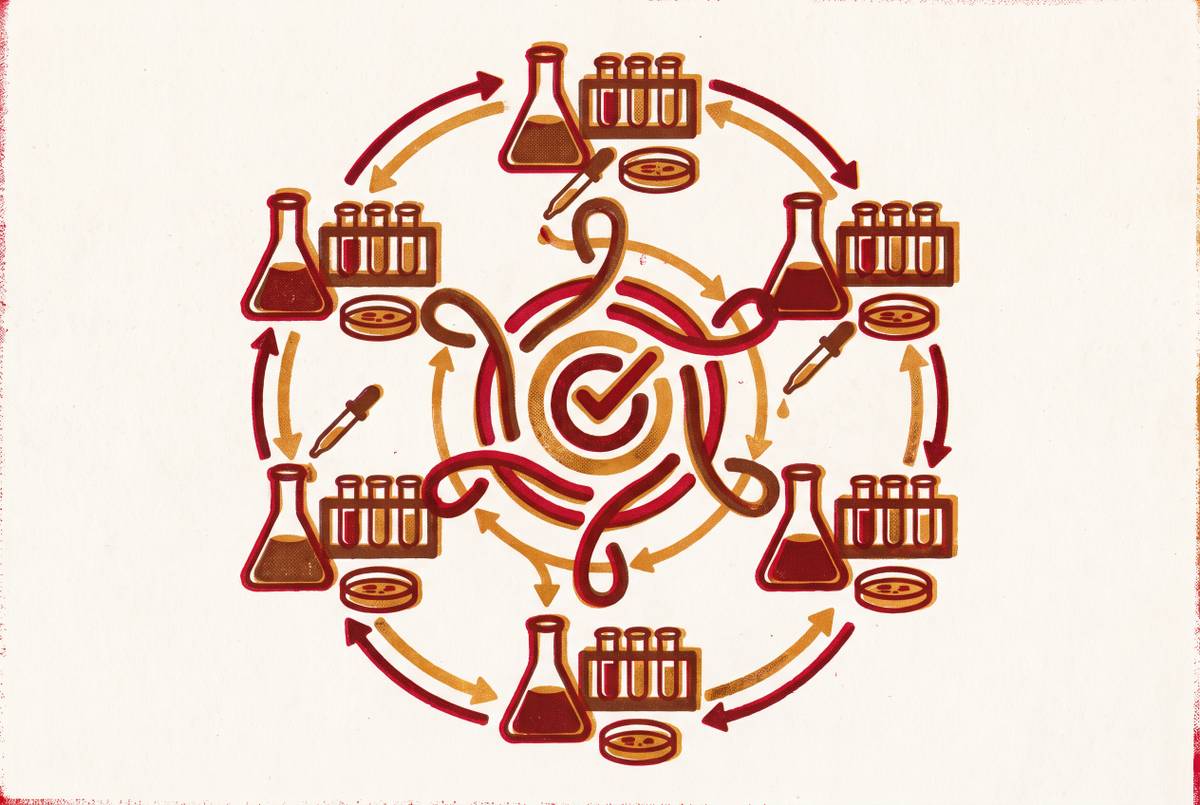
Authors should use a submission checklist organized around four disclosure layers, namely reaction buffer, extract, QC, and format. The buffer entry should show where to find the complete final formulation and the record of batch-specific magnesium optimization. The extract entry should link the details of its source and preparation to the batch that was used. Explicit omissions belong in that record too. A statement that dialysis was omitted is more useful than an unexplained blank.
The QC entry should show which activity data, same-run control, and calibrated target measurement go with the preparation. The format entry should locate the reaction conditions and, where applicable, the automation, evaporation, and normalization records. Difficult-protein work needs its additional intervention and activity-assay disclosures.
Reviewers should ask for missing entries to be filled in before publication. Journals that publish CFPS methods should require the checklist when a paper is submitted, just as structural biology journals require crystallographic data deposition.
Sources
- A simplified and highly efficient cell-free protein synthesis system for prokaryotes
- A simplified and highly efficient cell-free protein synthesis ...
- Microbial cell-free protein synthesis and its progression toward industrial use - PMC
- A User’s Guide to Cell-Free Protein Synthesis
- Cell-Free Protein Synthesis Reactor Formats: A Brief History and Analysis
- Advancing synthetic biology through cell-free protein synthesis - ScienceDirect